

Picture it: the new sectional finally shows up, the delivery crew squeezes it into the living room, and suddenly you can't reach the window without climbing over the chaise. It happens more than you'd think. A sectional is usually the biggest thing in the room, so a small measuring slip turns into an annoyance you live with every single day.
This sectional sofa buying guide follows the order we'd use ourselves: measure the room, pick a shape, work out which way it should face, and only then start looking at fabric. Get those first steps right and the rest is the fun part.
Step 1: Measure Your Room Before Anything Else
Grab a tape measure, a roll of painter's tape and a scrap of paper for a rough sketch. Jot down every wall length, then mark the doors, windows, radiators, vents, outlets and wherever the TV or fireplace sits. No fabric in the world will make up for a sofa that covers the only heat register or bumps the door every time it opens.
Clearance numbers to plan around
Main walkways: leave 30 to 36 inches for paths people use every day, such as the route from the entry to the kitchen.
Sofa to coffee table: 14 to 18 inches, close enough to reach a drink and far enough to walk past.
Sides of the sectional: about 18 inches between the ends and the nearest wall or side table keeps the room from feeling boxed in.
Sofa to TV: a common rule is 1.5 to 2.5 times the screen's diagonal. For a 65-inch TV, that's roughly 8 to 13.5 feet.
Once you've got these numbers, tape the sectional's footprint on the floor and leave it there for a day or two. It sounds fussy, but it's the best test we know. If you keep stepping over the tape on the way to the kitchen, the sofa's too big, and it's much better to find that out now than after delivery.
Check the delivery path too
Measure every doorway, hallway, stair turn and elevator the sectional will pass through. Compare the narrowest point with the depth and height of the largest piece in the box, not just the assembled width. Modular sectionals ship in separate pieces, which makes them a strong choice for walk-ups and narrow halls. Our guide on how to measure a sofa for your room, doorways and stairs [internal link: blog row 12 once published] covers this in detail.
Step 2: Match the Sectional Size to Your Room
Sectionals are sold by their overall length on each side. The table below shows typical ranges and the room size each one suits. Treat these as starting points and adjust for doors and walkways.
| Sectional size | Typical overall length (longest side) | Seats | Best for |
|---|---|---|---|
| Apartment / small | 80 to 95 inches | 3 to 4 | Rooms around 10 x 12 ft, studios, dens |
| Medium | 96 to 115 inches | 4 to 5 | Rooms around 12 x 15 ft |
| Large | 116 to 130 inches | 5 to 7 | Family rooms 14 x 18 ft and up |
| Oversized / U-shaped | 130+ inches across the back | 6 to 8+ | Open-plan spaces, basements, media rooms |
A useful check: the sectional should take up no more than about two-thirds of the wall it sits against. Spanning the full length of a wall makes the room feel shorter.
Step 3: Choose a Sectional Shape
L-shaped sectional
The most common layout. Two sections meet at a corner to form an L, so the sofa fits neatly into a corner or floats to divide an open-plan room. It works in most medium rooms and gives you a corner seat that many people treat as the best spot in the house.
Sectional with chaise
A standard sofa with one extended seat for stretching out. It takes less floor space than a full L and suits smaller living rooms. Keep the chaise on the side with the least foot traffic, and don't let it reach more than halfway across the room.
U-shaped sectional
Three sides wrap around a center point, usually a coffee table or ottoman. It seats the most people and creates a defined conversation zone, but it needs open space on at least one side so the room doesn't feel enclosed. Best for large family rooms and media rooms.
Curved sectional
Rounded backs soften a room and encourage conversation. Curved pieces look best floating in the middle of a large space rather than pushed against a wall, so plan for extra depth.
Modular sectional
Individual pieces (armless chairs, corner units, ottomans, chaises) connect in different ways. You can start with a sofa and add a corner later, or split the pieces across two rooms when you move. Modular designs are the most flexible option for renters and growing families.
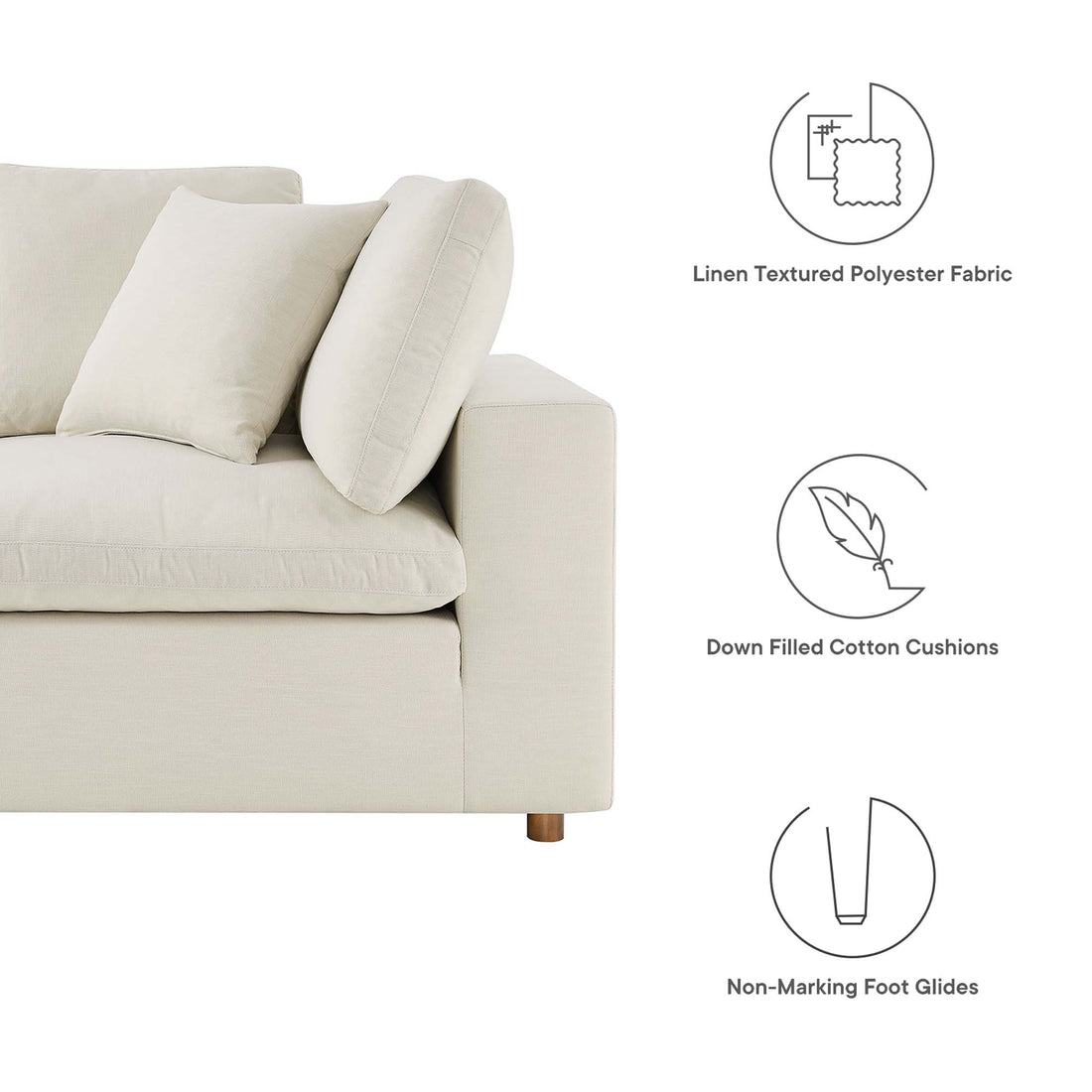
For a real example, the Commix 4 Piece Down Filled Overstuffed Sectional Sofa Set is made up of separate pieces, so you can set it up as an L, split it across a room or rearrange it after a move. Each piece is also far easier to carry up a staircase than a one-piece sofa.
Step 4: Pick the Orientation (Left Facing vs. Right Facing)
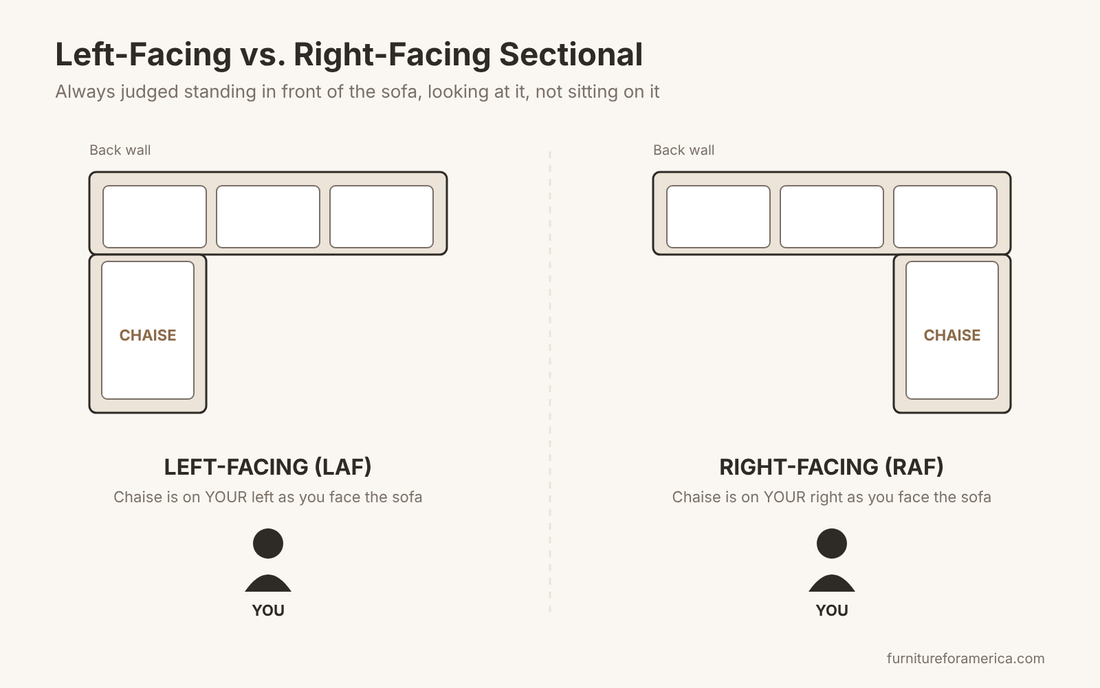
Here's the bit that trips up almost everyone. "Left facing" and "right facing" describe where the arm or chaise sits when you're standing in front of the sectional and looking at it, not when you're sitting on it. Read that twice before you check out.
Left-facing (LAF): the chaise or longer side is on your left as you face the sofa.
Right-facing (RAF): the chaise or longer side is on your right as you face the sofa.
Reversible: the chaise cushion and base can move to either side. A good pick if you might rearrange or move.
Symmetrical: both sides match, common on U-shapes.
Here's how the two look from above:
Still not sure? Stand in the doorway you use most and imagine walking in. You want the open end of the sectional facing you, so the room feels welcoming, with the chaise tucked away from the path.
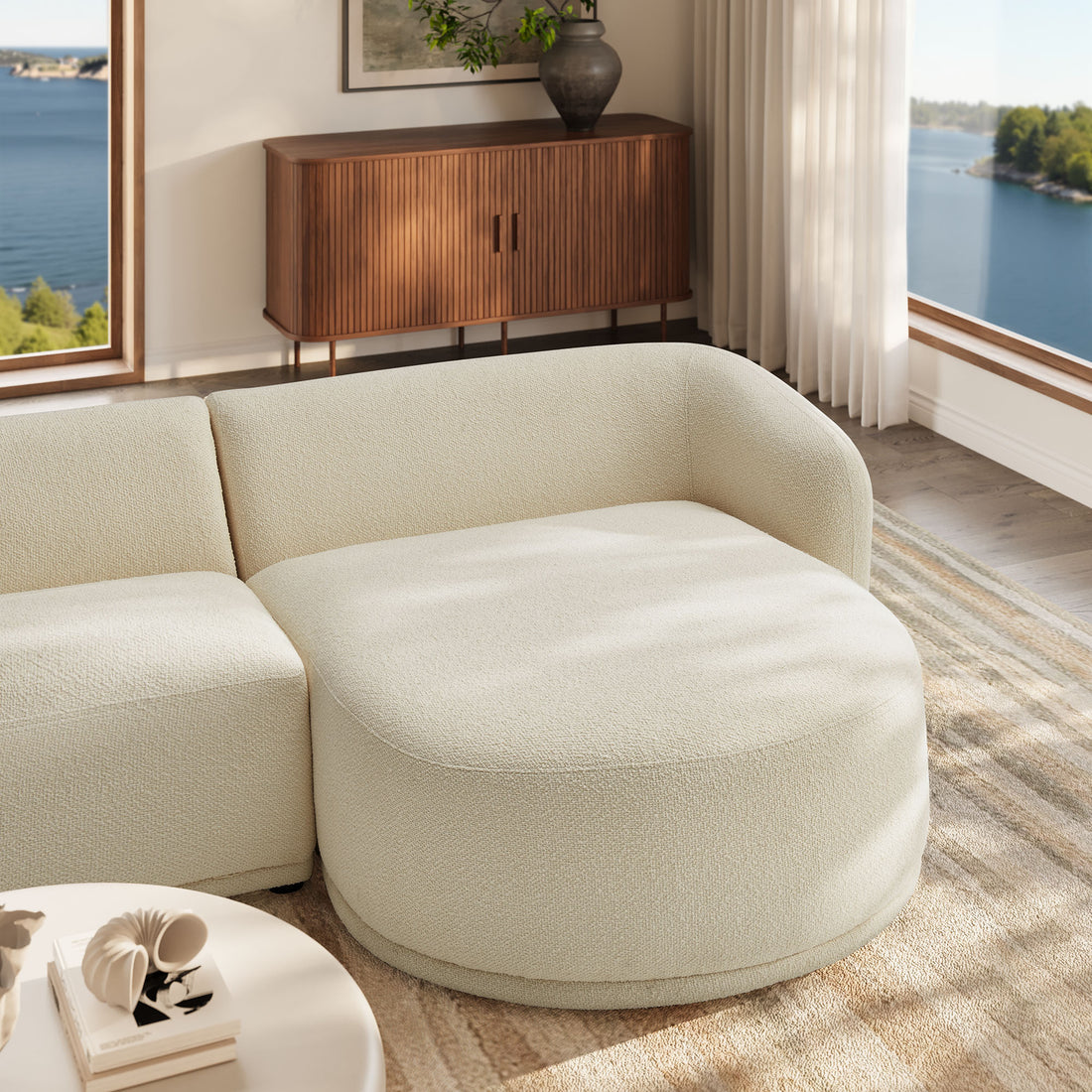
If it helps to picture it, look at the Monica 2 Piece Right Facing Boucle Fabric Modular Sofa with Chaise. Stand in front of it and the chaise is on your right, which is exactly what right-facing means. It also comes in a left-facing version.
Step 5: Get the Comfort Dimensions Right
Footprint decides whether the sectional fits. Seat dimensions decide whether you enjoy it.
| Measurement | Typical range | What it means for you |
|---|---|---|
| Seat depth | 20 to 24 in (standard), 25 to 30 in (deep) | Standard suits upright sitting and shorter adults. Deep seats suit lounging and taller people. |
| Seat height | 16 to 19 in | Lower seats feel casual. Higher seats are easier to get in and out of. |
| Overall depth | 34 to 42 in | Affects how far the sofa projects into the room. |
| Back height | 28 to 36 in | Low backs look modern and keep sightlines open. High backs support your head. |
Can't test it in person? Measure the seat depth and height of a sofa you already find comfortable, at home or at a friend's place, and use those as your target numbers. It's a surprisingly reliable shortcut.
Step 6: Choose Upholstery That Fits Your Life
Performance fabric: treated to resist stains and spills. The safest choice for kids and frequent entertaining.
Boucle: textured, soft and on-trend. Looks great in neutral rooms but loops can snag on pet claws.
Velvet: rich color and a soft feel. Tightly woven synthetic velvets hold up better than many people expect. See our Velvet collection.
Linen and cotton blends: breathable and relaxed, but they wrinkle and stain more easily.
Faux and vegan leather: wipes clean and resists pet hair. Choose a quality grade to avoid peeling.
Color matters as much as fiber. Mid-tones such as oatmeal, taupe, grey and olive hide everyday wear better than bright white or very dark solids.
Step 7: Decide Which Features You Need
Sleeper: a pull-out bed turns the living room into a guest room.
Reclining seats: power or manual recliners for media rooms.
Storage chaise or ottoman: hides blankets, toys and remotes.
Removable, reversible cushions: easier to clean and wear more evenly over time.
Connector hardware: check that modular pieces lock together so they don't drift apart.
Every extra adds cost and weight. Be honest with yourself about which ones you'd use every week, and skip the rest.
Step 8: Set a Realistic Budget
Sectional prices vary with size, frame construction, cushion fill and fabric. A rough guide: under $1,000 for smaller budget-friendly designs, $1,000 to $3,000 for most mid-range sectionals, and more for premium materials and large U-shapes. Spend where it counts: a solid or engineered hardwood frame, sinuous or eight-way hand-tied springs, and high-resilience foam cushions will outlast trend-driven details.
At Furniture For America, every order ships free to the continental U.S. and comes with a 30-day return window, so you can try a sectional at home with less risk.
How to Arrange a Sectional in Your Living Room
Anchor it with a rug: the front legs of every section should rest on the rug. For most L-shaped sectionals, that means an 8 x 10 or 9 x 12 rug.
Face the focal point: orient the longest side toward the TV, fireplace or view.
Float it in open plans: the back of the sectional can define the living area. Add a slim console behind it for lamps.
Pick the right coffee table: aim for a table about two-thirds the length of the sofa side it faces. Round tables work well inside an L. Browse our tables for options.
Sectional Sofa Buying Checklist
- Measure the room, doorways, stairs and elevator.
- Tape the footprint on the floor and check walkways.
- Choose a shape: L-shaped, chaise, U-shaped, curved or modular.
- Confirm left-facing or right-facing from the front of the sofa.
- Compare seat depth and height with a sofa you like.
- Pick a fabric suited to kids, pets and sunlight.
- List must-have features and set your budget.
- Read the shipping and return policy before you order.
Quick Answers to Common Sectional Questions
What size sectional should I get for my living room?
Measure the wall the sectional will sit against and choose a piece that covers about two-thirds of it, while keeping 30 to 36 inches for walkways. In a 12 x 15 ft room, a sectional between 96 and 115 inches on its longest side usually fits well.
How do I know if I need a left-facing or right-facing sectional?
Stand in front of the sectional and look at it. If the chaise or long side is on your left, it's left-facing. If it's on your right, it's right-facing. Choose the side that keeps the chaise away from the main walkway.
Is an L-shaped or U-shaped sectional better?
An L-shaped sectional fits most medium rooms and corners. A U-shaped sectional seats more people and works best in large rooms or open-plan spaces with room to walk around it.
How deep should a sectional be?
Most sectionals have an overall depth of 34 to 42 inches and a seat depth of 20 to 24 inches. Choose a deep seat of 25 inches or more if you like to lounge or have tall family members.
Will a sectional fit through my door?
Compare your narrowest doorway, hallway and stair turn with the height and depth of the largest box, not the assembled sofa. Modular sectionals arrive in smaller pieces and are the easiest to get into tight spaces.
Find Your Sectional at Furniture For America
Once you've got your measurements and know which way the chaise should face, shopping gets a lot easier (and a lot less stressful). Browse our sectional sofas to filter by size and style, or see the full living room collection to finish the space. For smaller rooms, read our list of the best sectional sofas for small living rooms. Questions about dimensions or delivery? Our support team is available 24/7 at 1-332-291-6865.


